
There’s a strange moment happening in enterprise technology right now. For years, the default approach to finding software and digital providers was pretty simple: find the platform that best suits your organizational needs, move more infrastructure to the cloud, connect more services and let specialist vendors handle the complicated stuff. And, for the most part, it worked.
Cloud platforms made infrastructure easier to scale. SaaS products reduced operational overhead. Specialist services made it possible to add search, analytics, security, AI and other capabilities without building everything internally. But as these technology providers became more advanced, and as more and more of their services became harder to decouple from the business operations, organizations are starting to ask a different question.
How much control do we have over all of this? And how much control do our providers have over us?
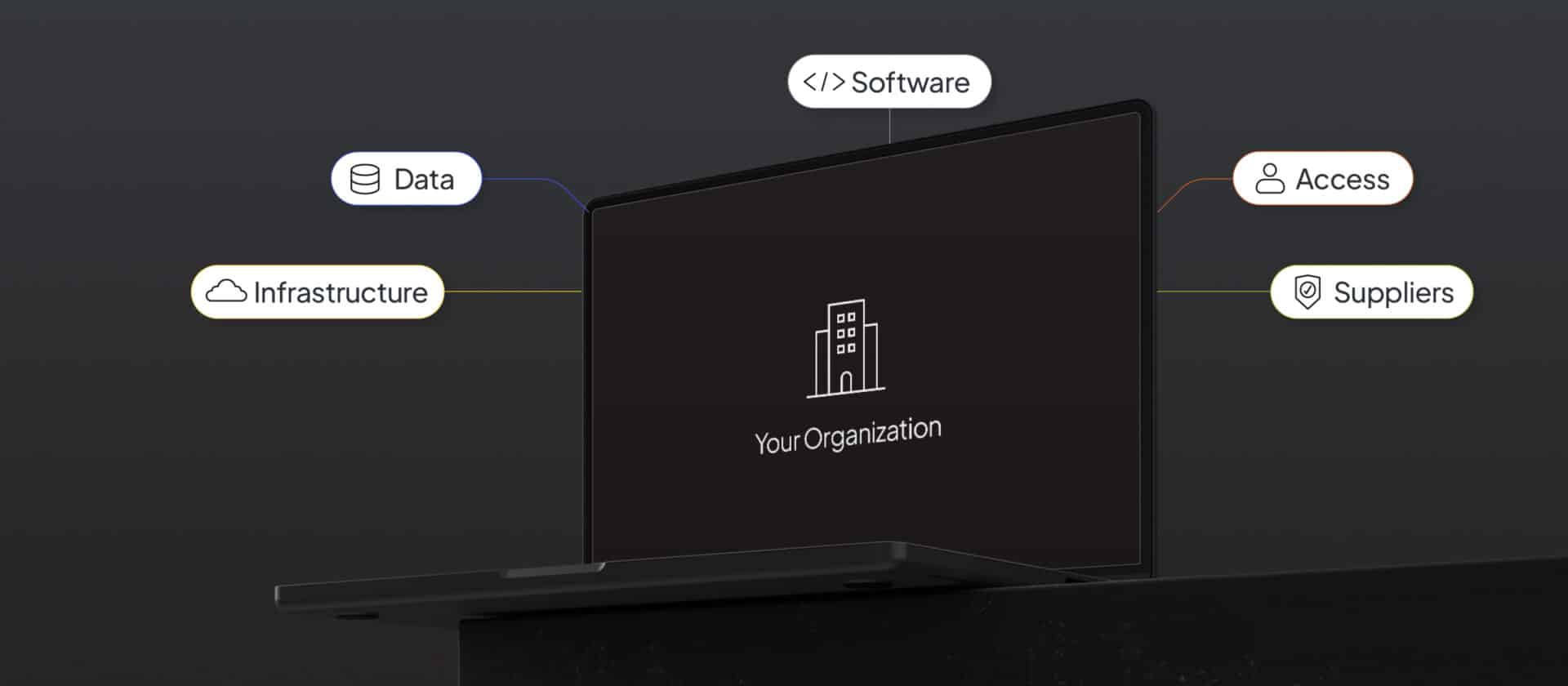
When you look at a modern tech stack today, you’ll notice that a handful of software providers control the majority of the enterprise software market. While this kind of posture in business is somewhat normal, the implications of having a provider whose services you require, but also cannot leave or switch from creates a complicated paradox for enterprises to navigate. To see what we mean by this, you can ask yourself a few simple questions about your business:
Who controls the software your teams use? Which laws apply to the provider? What happens if prices suddenly change? Can you move if the prices do change? How much will a migration impact how you do business? Looking closely at those questions can reveal something uncomfortable: the tools and platforms an organization depends on may have more control over its digital operations than the organization realizes.
And this is where digital sovereignty starts to matter.
Digital Sovereignty Is About Maintaining Technology Choice
Digital sovereignty sounds like a big, abstract term, but the idea is relatively simple at an organizational level. It is about maintaining meaningful control over the technology, infrastructure, software and data an organization depends on. It means retaining the ability to make important decisions instead of having those decisions dictated by the architecture, commercial model or limitations of a technology provider.
That does not mean doing everything internally. Organizations do not need to operate their own data centers, rebuild every piece of software or avoid external partners. But what it is really about is choice.
Can your organization decide where its data is stored? Does it understand who has access to it? Can it choose which jurisdiction its infrastructure operates under? Could it change suppliers without rebuilding the entire digital estate? Can it inspect, modify or replace the software it depends on? Can its data and content be exported in a useful form?
The harder or more uncomfortable the answers to these questions get, the more you begin to realize the importance of maintaining digital sovereignty.
Digital Sovereignty Is Becoming an Enterprise Technology Priority
Digital sovereignty has often been discussed at the level of governments and countries. In Europe in particular, the debate has grown around dependence on foreign technology providers, control over data, legal jurisdiction and the ability to apply European rules across global digital infrastructure. But the same issues exist inside individual enterprises.
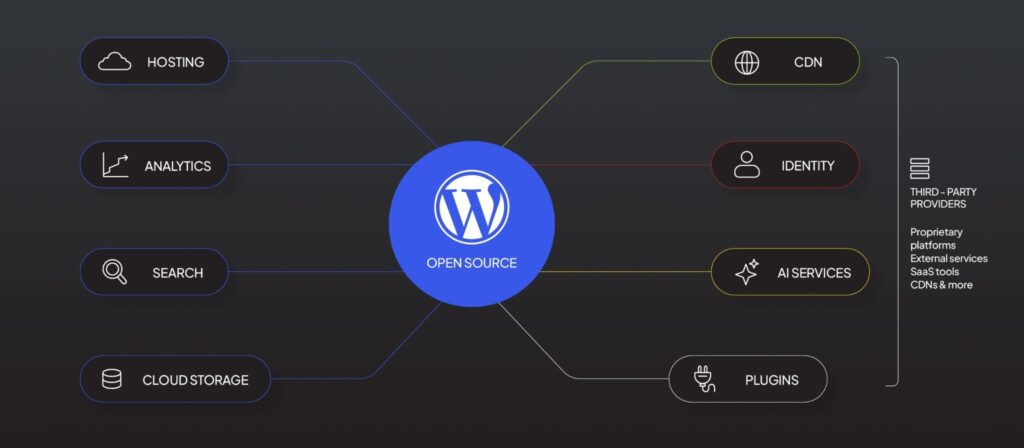
A company may appear to control its digital platform while depending heavily on outside providers at almost every layer. Its websites may run on one provider’s cloud infrastructure, search may be delivered by another service, customer information may sit inside a SaaS CRM, authentication may depend on an identity provider and AI functionality may rely on another external platform.
None of these dependencies are a problem on their own. A pharmaceutical company cannot be expected to spin up an AI model that provides the same functionality as the current market leaders. The real problem appears when those dependencies become difficult or impossible to reverse. Data may be hard to export, proprietary functionality may become deeply embedded in the platform, integrations may depend on one vendor’s APIs or moving elsewhere may require rebuilding large parts of the system.
What happens then is that you end up paying for a service, but you’re also really at the mercy of said service provider. If they want to change the functionality of a product, you’ll just have to smile and agree. If they raise prices to a point that’s concerning, you won’t have much choice but to pay the bill. Digital sovereignty does not mean removing every external dependency. The more important question is whether those dependencies are understood, intentional and replaceable.
Open Source Gives Organizations More Control Over Their Technology
And this is where open-source platforms become particularly relevant. With proprietary software, the organization using the platform ultimately depends on the company that controls it. That vendor decides how the product develops, which features remain available, how pricing changes and what migration options exist. Open-source software changes that relationship.
The underlying technology is not controlled exclusively by a single commercial vendor. Organizations can inspect the code, modify it, operate it independently and choose who works on the platform. That does not remove the need for external partners or commercial services. What it changes is the level of control those providers have over the underlying technology.
An organization can replace a development partner without necessarily replacing the platform. It can change infrastructure providers while keeping the same software. It can modify functionality rather than waiting for a vendor to add it to a proprietary roadmap. That separation between software, infrastructure and service providers creates something increasingly valuable: the ability to change one part of the stack without automatically changing everything else.
WordPress Supports Digital Sovereignty Through Open-Source Flexibility
WordPress becomes particularly interesting when digital sovereignty is viewed through an enterprise lens. WordPress is open source and released under the GPL, giving users the freedom to run the software, inspect it, modify it and redistribute it.
Individual organizations can decide who develops the platform for them, who maintains it, which technologies are integrated with it and how the wider architecture is designed. They can also choose where the platform runs and where the data is being hosted. There is no single WordPress company that controls the infrastructure on which every WordPress website must operate. WordPress has always been open source and it’s managed and maintained by a team of highly dedicated contributors from around the world.
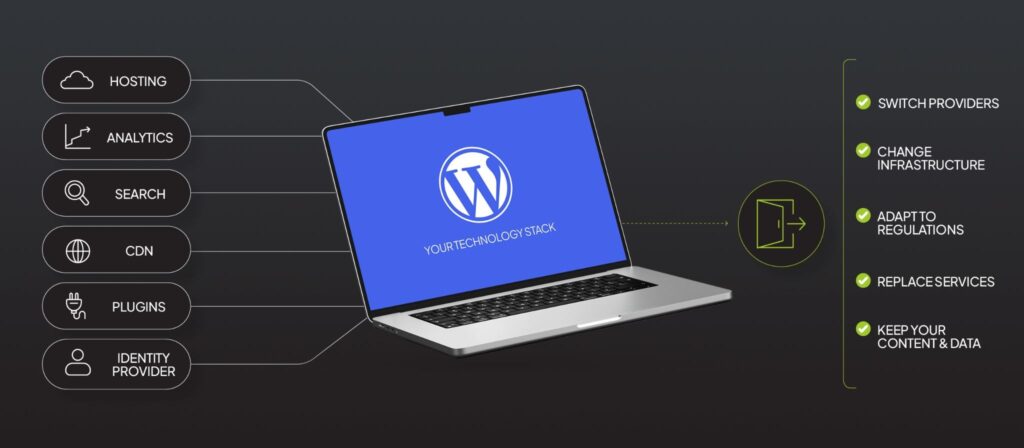
WordPress can run across a wide range of hosting and infrastructure environments. An organization might use a large global cloud platform, a European hosting provider, its own infrastructure or another environment that better fits its regulatory, operational and data requirements. If those requirements change, the CMS itself does not necessarily need to change with them. Unlike with some proprietary SaaS platforms where the software, hosting model and commercial relationship are effectively one package.
With WordPress, the layers can be separated. The CMS can remain while the hosting provider changes. A new development partner can take responsibility for the existing platform. Supporting technologies can be replaced without requiring the content management system to be rebuilt. That does not make WordPress automatically sovereign, but it gives organizations significantly more room to make their own decisions. And it gives them a far greater level of control over their digital operations.
Data Location Alone Does Not Create Digital Sovereignty
One of the easiest mistakes to make is to reduce digital sovereignty to a single question: Where is the server located?
Data location matters, especially when organizations have regulatory, contractual or internal requirements around data residency. But server location alone does not explain who ultimately controls the service. A fuller picture includes the provider’s ownership, the jurisdiction in which it operates, where backups are stored, which subprocessors are involved and where information moves between connected systems.
A server located in Europe may still be part of a much larger global technology environment. Likewise, a platform may interact with analytics systems, CDNs, identity services, APIs and other external systems that process data elsewhere. Digital sovereignty therefore requires organizations to look beyond individual servers and understand the wider operating model around the platform.
WordPress provides flexibility here because the software itself does not require one particular hosting provider or deployment model. It doesn’t solve jurisdictional questions on its own, but it gives organizations more freedom to make those decisions independently.
Open Source Won’t Automatically Make a Technology Stack Sovereign
Of course, installing WordPress does not magically give an organization digital sovereignty. A WordPress website can still depend heavily on proprietary hosting platforms, external analytics services, SaaS search tools, third-party CDNs, cloud storage, identity providers, AI systems and plugins that send data to outside services.
This is why digital sovereignty has to be considered across the whole technology stack rather than at the CMS layer alone. The content management system is only one part of an enterprise platform. There is also hosting infrastructure, data storage, authentication, analytics, search, integrations, deployment processes and the operational knowledge required to keep everything running.
An organization could use open-source software while still being heavily dependent on one infrastructure provider. It could technically have the ability to change vendors while lacking the documentation or expertise required to make that change realistic. Open source helps solve an important part of the sovereignty problem because the underlying software is not locked behind a single commercial vendor.
Digital Sovereignty Should Be Evaluated Across the Entire Technology Stack
A useful way to assess digital sovereignty is to stop looking at individual tools in isolation and start looking at the relationships between them. Organizations need to understand who runs their infrastructure, where it operates and whether applications can be moved elsewhere. They need to know where data is stored, who can access it and whether it can be exported in a useful format.
They also need to understand who controls the software roadmap, how difficult connected services would be to replace and whether enough operational knowledge exists to move or recover the platform if necessary. Looking across those layers also shows why digital sovereignty is closely connected to resilience.
A platform that can be restored from independent backups, moved between infrastructure providers and operated by more than one capable partner is less exposed to a single point of failure. The goal is not to eliminate dependencies. It is to understand which dependencies have been chosen, which can be replaced and which have quietly become permanent.
Think About Digital Sovereignty as an Exit Door
Maybe the easiest way to think about digital sovereignty is this:
Where are the exit doors in your technology stack, and how easy are they to access when you need them?
Digital sovereignty is ultimately about preserving the ability to choose, adapt and move when requirements change. WordPress gives organizations a platform they can continue to control, even when everything around it changes.
Open source does not eliminate every dependency, and WordPress does not automatically create digital sovereignty. What it can do is reduce the number of fundamental technology decisions that are permanently controlled by somebody else.
In a digital environment increasingly built around platforms, cloud infrastructure, subscriptions and external services, that freedom becomes more valuable.
Digital sovereignty is about retaining the ability to decide who controls what, where dependencies sit and what can change when business, regulatory or operational requirements evolve.
Related articles
-
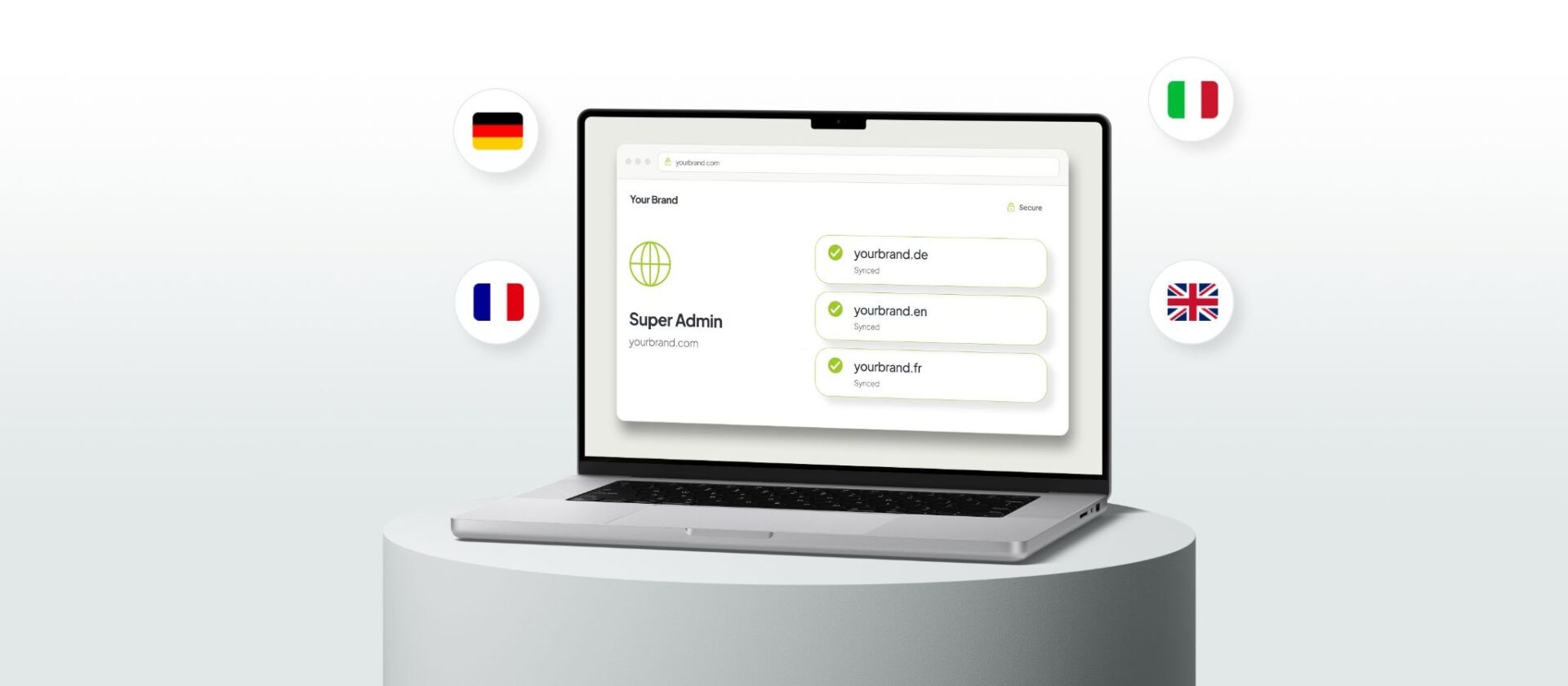
Multi-market compliance: what to require from your CMS
Managing multi-market becomes a lot harder when you’re dealing with fragmented systems across markets. Here’s what you should require from your CMS.
-
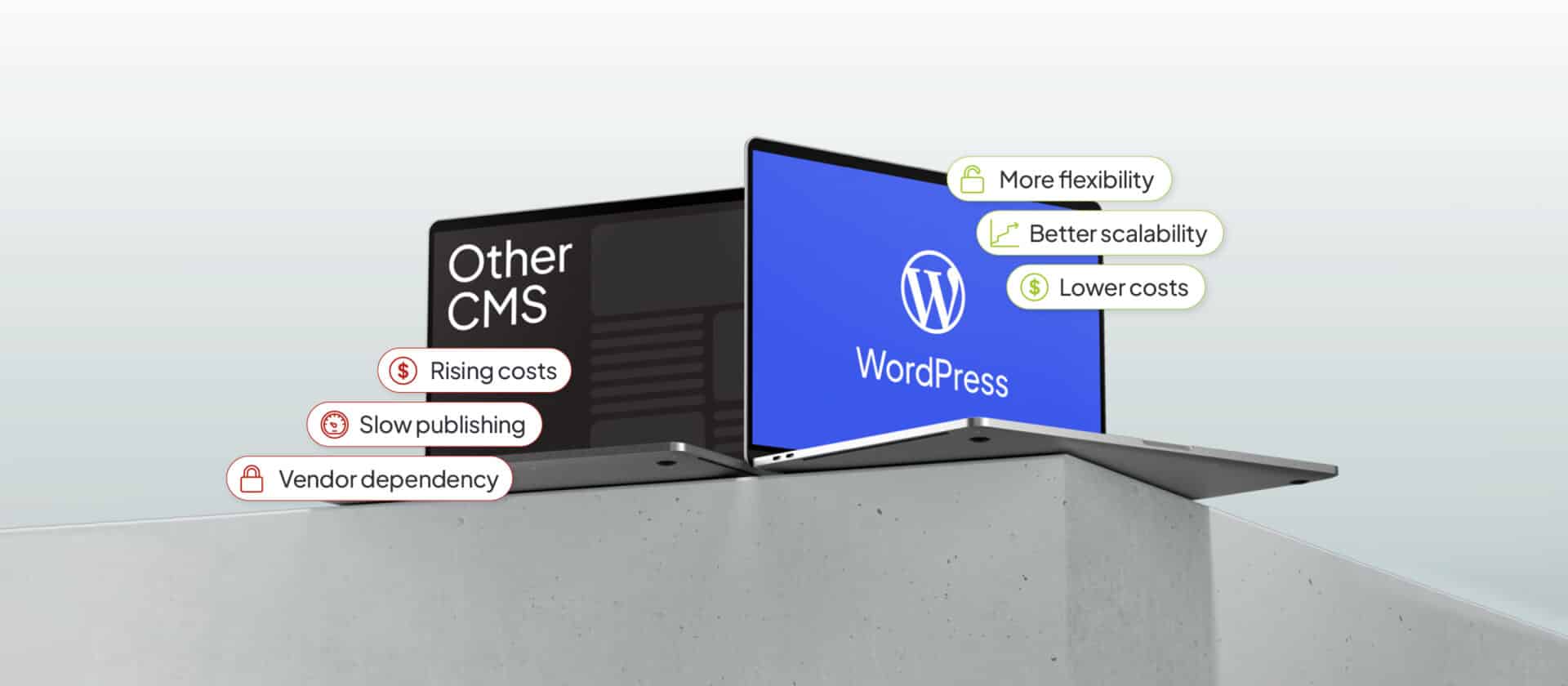
Why Enterprises Move to WordPress
Find out why enterprises and digital content teams choose WordPress for their global operations.
-
PaaS vs Self-Hosted WordPress: What You Should Know
Choosing between a managed PaaS environment and a self-hosted WordPress setup is one of the more consequential decisions a digital team can make.
Failed to submit:
one or more fields are invalid.