

A multi-market estate is normally governed by a set of documents: a review and approval SOP, a change control policy, a records retention rule, and a definition of who can publish what in which markets. The problem is that it makes approval and compliance dependent on manual process review. However when content teams work across different sites built by different devs over multiple years, maintaining your compliance posture adds more overhead than it should.
The gaps in multi-market content compliance
There are five gaps that make multi-market compliance a challenge:
- Audit evidence is assembled after the request. Records of what changed, when, and who approved it sit across a ticketing system, email threads, a spreadsheet, and in some cases only with contractors who have left the project.
- Live configuration diverges from approved configuration. The configuration signed off at launch, including tool versions, tracking scripts and consent settings, is not the configuration running two years later. Without clean record keeping of those differences and changes within a domain, content governance begins to drift and break.
- Approvals carry a date but no expiry. Nothing in the process tests whether an approval still applies after a given period of time, so an approved version and a live version can differ without anything being flagged or addressed.
- Delivery time and compliance risk get attributed across functions. Release delays are logged against compliance and compliance exposure is attributed to marketing failures. Both cases stem from a platform, or series of platforms, not being able to provide clear attribution.
- Fragmentation across systems decreases governance. When each market is spinning up its own site to make work easier or more efficient, governance starts to bend and drift from central regulations. This causes serious compliance risks for the entire content and publishing pipeline.
Why approved market sites can still create compliance risks
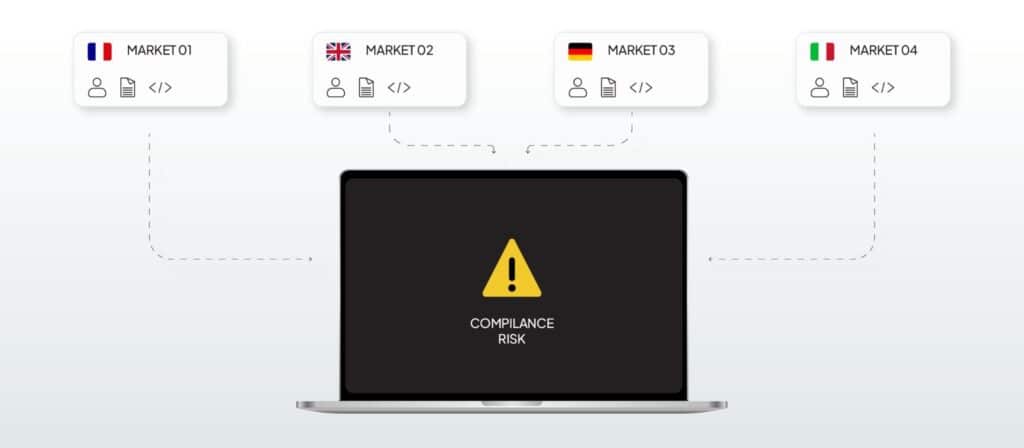
A guardrail or process written in a SOP document may be getting applied and reinforced by people across teams. But a guardrail baked into the platform gets applied by the platform regardless of team diligence, restructuring or process updates. On an estate of just 2 or more sites, having a manual safety net for compliance regulations simply can’t scale the same way when it’s handled on the platform level. Below are three common mechanisms that account for compliance risks across markets:
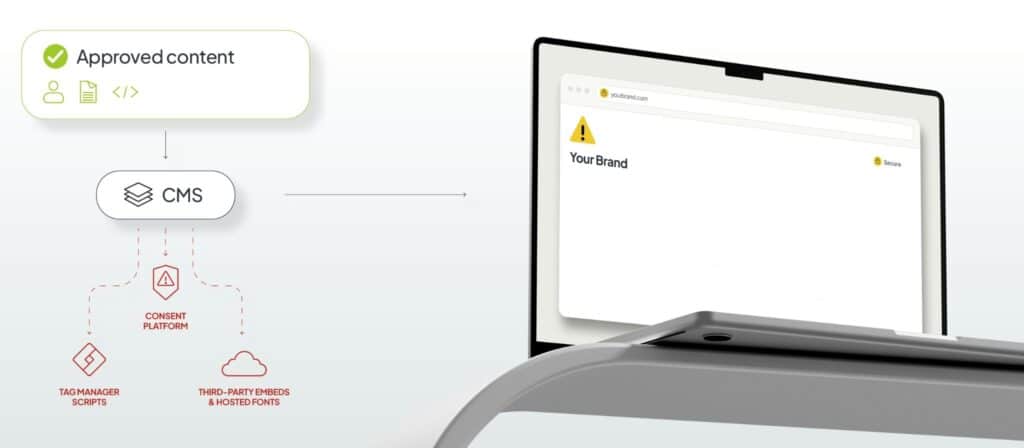
- Tag manager scripts sit outside the deployment pipeline
A tag manager deploys scripts to a live page without passing through the approved deployment pipeline, which places tag changes outside code review, version control and the deployment record. An advertising pixel added this way, for example, would execute on page load and start collecting data before the consent banner is displayed. Then the tag layer becomes a second set of infrastructure with its own access list, sitting outside your approved deployment pipeline.
- Consent platform configuration diverges per site
If your consent configurations are being maintained separately across your estate, it could produce cookies that get classified as essential when they are not, reject paths that don’t stop script execution, and trackers running on across the sites that are absent from the consent tool. If your internal review is reading configurations only instead of specific behaviours within the configured setup, these issues could slip through an internal review, adding risk across the entire domain.
- Third-party embeds and hosted fonts transfer data on page load
A font loaded from a third-party domain can send information such as a visitor’s IP address and request headers before they’ve done anything on the page. Under Articles 4(11) and 7 of the GDPR, consent has to be freely given, specific, informed and unambiguous, which means the user needs to take a clear affirmative action. EU case law has also made clear that silence, inactivity and pre-ticked boxes do not count as consent. That means a script firing before someone has actively agreed can create a compliance problem. The difficult part is that you won’t necessarily spot this in a screenshot or during a basic page review. And because Article 3 can bring organisations outside the EU into scope when they offer goods or services to people in the EU or monitor their behaviour, the audience a market site serves can matter more than where the site is hosted or which entity owns it.
What content compliance regulations GDPR Article 25 requires of your platform
GDPR Article 25 requires data protection by design and by default. This means that the most opt-in privacy-protective settings, including no behavioural tracking, have to be set as on in their default state. Changing the default settings must be a deliberate choice by the user. All non-essential tracking has to be off until someone actively turns it on.
Release-time requirements: keeping approved content approved
Below is a list of release-time requirements that need to be applied to your content. Each of the requirements is testable, and we’ve included examples of how our own multi-market compliance teams handle these during our projects.
1. Changes to content during production. Every code and configuration change applied to your content should reach the live site through an approved, reviewed pipeline. One way to test your platform is to see what the platform does if a change is attempted outside your review pipeline.
How we handle it: we build four environment tiers that never share databases, credentials or configuration. This prevents deployments from skipping staging, SSH access is given by key only, and code-owner review takes place on the default branch.
2. Audit trails. Who changed what, when, and who approved it should be recorded by the system. This removes the need to maintain a separate log.
How we handle it: new releases come from signed Git tags rather than a branch. Commits and tags also get cryptographically signed, and we implement a mandatory activity log plugin on every site we manage for additional oversight.
3. Central definitions of roles and capabilities. Market teams must hold the capabilities they need to manage their sites and no others. But these capabilities have to come from centrally-managed definitions, not per-site configurations.
How we handle it: we use WordPress Multisite to create central capability sets written in code and apply them on a platform level across the entire domain. Two-factor authentication is required on any admin-capable account and SMS is not accepted as the second factor for additional protection against risk.
4. Environment parity. What was approved in staging is what goes live, including plugin versions, PHP version and configuration.
How we handle it: staging matches production on plugin set, PHP version and configuration. We run regular data syncs from production to staging without anonymizing any data, so that staging with prod database is a playground for testing and debugging.
5. Security-protective defaults. New market sites start with tracking off, and enabling it is a user-based decision.
How we handle it: we implement security headers on every site we manage, contracted processing in the EU and EEA only with third-country transfer requiring your prior consent. The consent platform belongs to our clients, and the content Security Policy is configured by an expert per page.
6. A tested rollback path. Removing a non-compliant page or release must have a documented step with a clear, actionable completion time.
How we handle it: new pages are tagged, so the last known-good state is easily identifiable, and completion times are agreed per engagement for extra clarity and traceability. A page on a site that needs changing is edited in the editor. Via the Stream plugin we have basic tracking of which pages were recently updated and by whom. We also have advanced plugins like Approval Workflow, which support even more detailed change tracking.
7. Process-validation evidence. Documenting which records the platform generates without manual maintenance.
How we handle it: process validation is set and agreed per project, and we set it out against your working governance policies so they match how your teams work and interact with the platform.
Run-time requirements: monitoring your estate between releases
1. A live inventory of every domain and subdomain. Coverage is limited by the inventory, which means that any domain not on the list isn’t being checked, and campaign microsites, country subdomains and retired product sites that still resolve belong on the inventory.
How we handle it: regular interval checks on uptime, SSL and page speed across the domains we manage, which report whether a site in the inventory is up rather than which scripts it loaded.
2. Consent tested by script behaviour. Reject consent, then confirm the scripts do not fire. A configuration review can show that the script passes while the behaviour of the script might be failing.
How we handle it: consent is tested and verified manually by an expert before launch and after any change to tracking, and a passing scan grade is not compliance.
3. Continuous scanning. Weekly observation should not replace the quarterly audit cycle, but they should rather be made in tandem with each other. Running manual checks across hundreds of domains every quarter alone is slow, error-prone and unscalable.
How we handle it: we run dependency scanning continuously, Critical and High findings block a merge, triage is committed within five business days, and our dynamic security testing runs quarterly.
4. A clear review path for script and tag governance. Local teams should be able to keep the ability to ship local campaigns, and any new script should pass review before reaching a live page.
How we handle it: this is something we work with alongside our clients to build, but ultimately we cannot enforce this process as an agency since the tag layer never touches a deployment pipeline.
5. No third-party embed without a data transfer check. Every new embed needs to be assessed for what it sends and when, before it gets implemented.
How we handle it: our Content Security Policy limits which third-party domains a page may call, so an unreviewed embed automatically becomes a blocked request, and configuring happens manually by an expert per page.
6. Expired approvals. A live page whose approval has lapsed becomes visible on its expiry date rather than waiting invisibly until the next audit cycle.
How we handle it: no CMS does this out of the box, but we build these notification capabilities into WordPress and customize them per your organizational approval needs.
WordPress Multisite for multi-market compliance governance
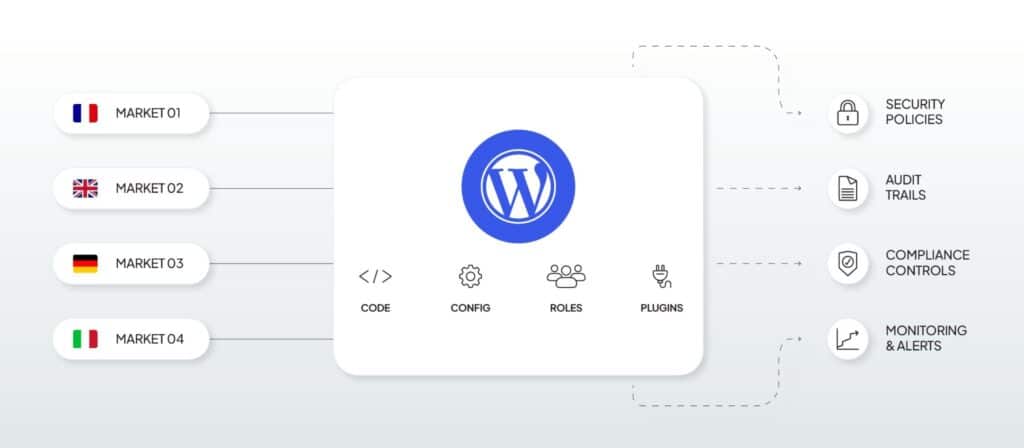
On a Multisite network every market site runs from a single codebase and database. User accounts are shared across the entire Multisite network. And architectural, as well as new, plugins get installed centrally so a subsite administrator on a local domain cannot install one unless the network is configured to allow it.
Capability sets can also be defined in code and applied per market site, because WordPress holds specific role definitions per site. Any code reaching production through version control is kept on the deployment and change record for clearer auditing, while the approval of the content for teams stays in the review system.
Multisite works best when it’s managed as a governance architecture tool. Central teams dictate roles and permission levels. Users can be shared and a central network administrator has access to every market, which makes network-level access and management easier when it comes to ensuring compliance across the domain.
Writing multi-market compliance into your requirements document
Multi-market compliance cannot only be treated as a set of documents that people consult when something changes. As your digital estate grows, the platform it’s built on needs to be able enforce compliance controls across the entire domain. The principle for ensuring full compliance across your markets is simple: make compliance an enforced property of the platform that’s handled automatically across the estate instead of a manual step in your publishing and review process.
Strengthen your multi-market compliance with our enterprise WordPress solutions.
We build and maintain WordPress platforms that help enterprises govern content, configuration and compliance across their markets.
WordPress for Enterprise: Multisite architecture and governance that centralises roles, permissions, code and configuration across your entire estate.
Quality Assurance: Release and compliance testing that checks both the configuration and real-world behaviour of your sites.
Stakeholder Alignment: Bring market teams, central governance and leadership together around clear publishing responsibilities and compliance requirements.
Custom Integrations: Secure CRM, ERP, analytics and SSO integrations designed with controlled access, clear ownership and credentials kept outside the codebase.
Maintenance & Support: Continuous monitoring, dependency scanning, patching and support to help keep your estate compliant between releases.
Ready to build compliance into your WordPress estate rather than manage it manually? Contact Syde.
Related Articles
-
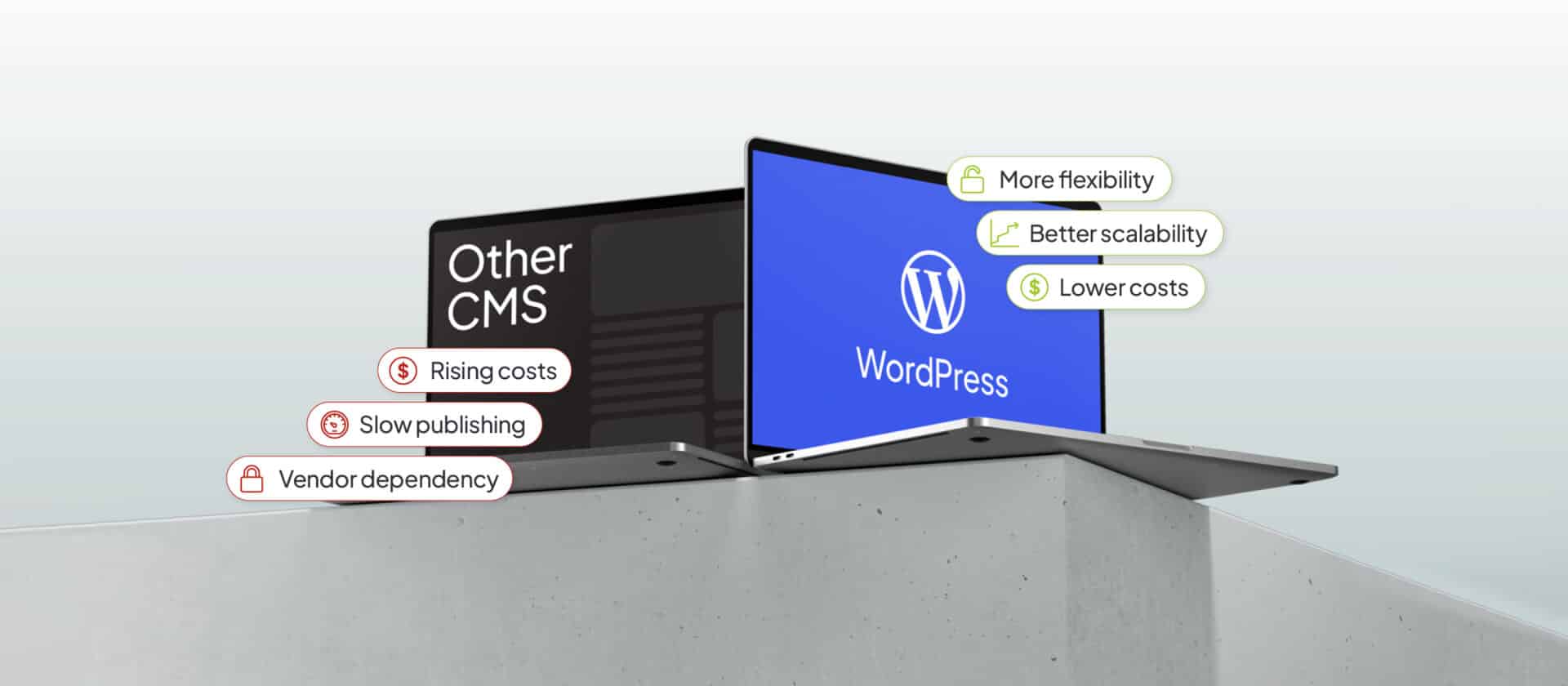
Why Enterprises Move to WordPress
Find out why enterprises and digital content teams choose WordPress for their global operations.
-
Digital Sovereignty in an Increasingly Dependent World
Digital sovereignty isn’t about removing third-party providers, but building an architecture that gives you the freedom to choose which providers you use.
-

PaaS vs Self-Hosted WordPress: What You Should Know
Choosing between a managed PaaS environment and a self-hosted WordPress setup is one of the more consequential decisions a digital team can make.
Failed to submit:
one or more fields are invalid.